
An Interview with Professor Sandra Guerra Thompson
The hiring process for law school professors is different than many other professions. For University of Houston Law Center Professor and Newell H. Blakely Chair Sandra Guerra Thompson, the thorough evaluation of her credentials was a whirlwind experience.
“What I didn't know is that I was getting a truncated version of the normal process,” Thompson said. “Normally, people apply through a national search process, they interview with a committee and it's a grueling thing. I skipped that, and had a one-day visit to the campus. It was back-to-back sessions all day long, with a talk at the lunch hour to the faculty. I hadn't had any practices. These days people moot this, and they practice many times. It was nerve-wracking to have just graduated a couple years earlier and now I'm standing before a whole esteemed faculty to give a talk. But somehow, I made it.
“All I remember is at the end of the day, I was walking back to my car and, for a moment, I thought I might pass out. I think I might have been holding my breath all day long. Fast forward 31 years, and here I am. I have been extremely grateful every single day.”
Thompson received her J.D. from Yale Law School in 1988. After working as an assistant district attorney in the New York County District Attorney's Office for two years, she joined the Law Center’s faculty in 1990 as an assistant professor.

Sandra Guerra Thompson is the Newell H. Blakely Professor of Law and former Director of the Criminal Justice Institute. She is widely published in the areas of criminal law, evidence, the regulation of forensic evidence, and federal asset forfeiture. She was also the first tenured Latina professor in the state of Texas.
“I knew that the University of Houston was the premier law school in the city of Houston,” Thompson said. “I applied, and they had already closed their hiring season, but they needed someone in my field. Newell Blakely had recently retired. They decided to interview me, and I was fortunate enough to get the job. I have always strived to fill the shoes of the legendary Evidence and Criminal Law teacher Newell Blakely so it was thrilling many years later to be awarded the chair named in his honor.”
Thompson said that joining legal academia marked the accomplishment of a long-term goal for her. She spent her first decade at the Law Center mastering her craft and juggling numerous responsibilities. For her, the ’90s marked a special time for the school.
“It was a really good time in a lot of ways,” Thompson said. “I had wonderful friends on the faculty that I developed. I had an excellent mentor in Irene Rosenberg. I couldn't have asked for a more brilliant and thoughtful mentor than her. The school was really coming into its own nationally for the first time. Rankings were new, and we did very well. We were quite competitive. There was a real pride around that.
“We also were becoming even more of a powerhouse in terms of the faculty scholarship. But there were several faculty members like John Mixon and David Crump who kept us grounded in teaching. That was very important. While we have done well in the rankings and in terms of national prestige for scholarship, we have never let go of this other important part of our jobs of connecting with our students. As a result, we've managed to become a school where almost all the faculty members are rated by the students as above average. That gives me a lot of pride.”
Among her favorite aspects of being a legal educator is watching students start to think like lawyers, Thompson said. While this can shine through in the classroom and on exams, Thompson said she sees it the most when she teaches seminars.
“That's where I feel pride for the accomplishments of my students,” Thompson said. “I get to know them and watch them start very nervously on an ambitious writing project. By the end of the semester, they have written something they're proud of and can use as a writing sample for jobs.
“But even more than that, they've learned so much about the process of research, writing and critical thinking that is going to serve them for their whole careers. Watching that is like watching the caterpillar turn into the beautiful butterfly. It's the most thrilling part of my job.”
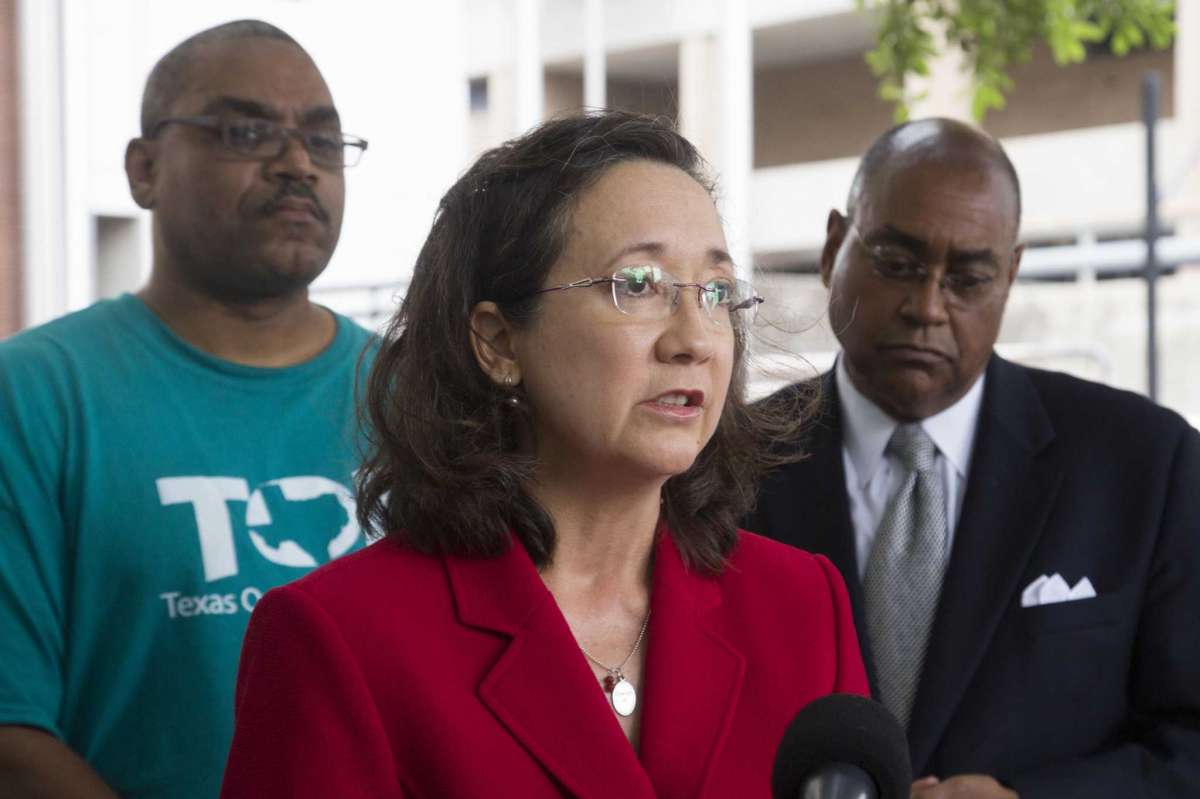
Professor Thompson has used her background as an educator to benefit the community. She serves as Deputy Monitor for the federal consent decree in the ODonnell v. Harris County settlement, which has transformed Harris County’s misdemeanor bail system.
Over the course of more than three decades, Thompson said the Law Center has transformed itself in numerous ways from recognition around the country, to a student population more reflective of the community.
“We have continued to get stronger in terms of national reputation,” Thompson said. “Moving in terms of rankings can be very difficult, but we have stayed competitive. At the same time, our student diversity has just grown and grown. Dean Baynes has talked a lot about this, and it's absolutely true. The classroom looks really different today, and the variety of experiences that people bring make for an exciting learning experience.
“Keeping a diverse faculty has been harder. The recent retirement of Michael Olivas and the untimely passing of our dear friend Ron Turner really set us back. Both were among our most prolific scholars, but we’ve hired some outstanding junior faculty members who add to our diverse richness and have dynamite scholarly credentials.”
As the Law Center turns 75 years old, Thompson said she hopes it remains a strong teaching school grounded in the needs of the legal profession.
“With the pandemic, I don’t know that there’s been a harder time to practice law, with courts being closed and remote appearances,” Thompson said. “It’s an extremely challenging time. Then with the racial and social unrest happening at the same time, those challenges present a lot of hard questions for us as a society, and lawyers are always at the forefront of speaking for the community and managing those conflicts.
“To move society forward, the need for good lawyers now is greater than it's ever been in my lifetime. Lawyers will continue to face very demanding issues for some time, and so my hope is that the law school will stay focused on its core mission of teaching students and helping to prepare them for the legal profession. We’re really going to need some good people to manage our governance in the future.”

