

Alumni Spotlight
UH Law Alumnus Stephen Cox Navigates Alaska’s Legal Landscape as New Attorney General
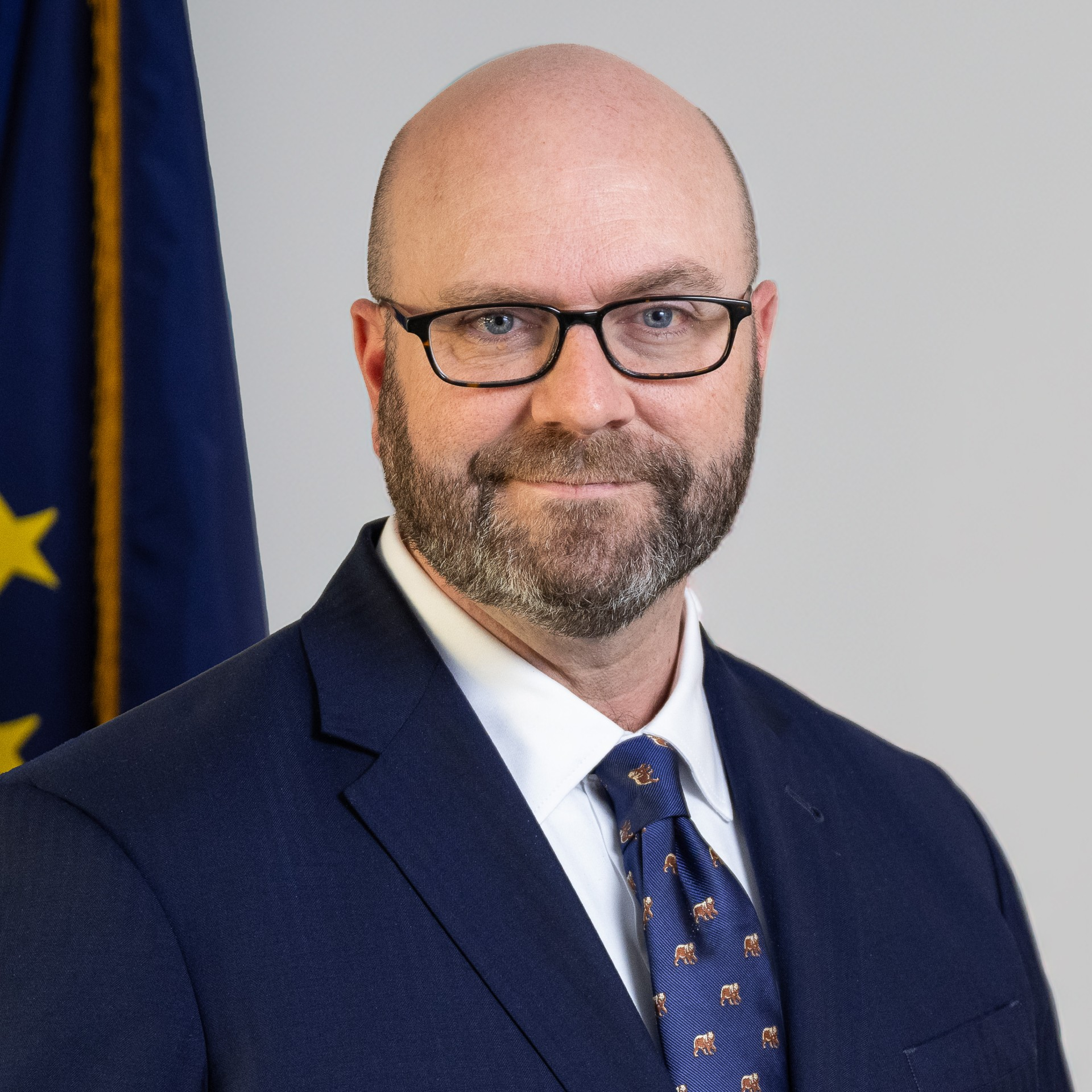
University of Houston Law Center alumnus Stephen Cox (J.D. ’06) is the new attorney general of Alaska.
March 2, 2026 - For Stephen Cox, the path from the University of Houston Law Center to the highest legal office in the “Last Frontier” of Alaska has been defined by a commitment to public service and a willingness to embrace complex, multifaceted challenges. Appointed as Alaska’s attorney last August Cox finds himself at the helm of a uniquely structured and immensely powerful state legal apparatus.
“I’ve been attorney general of the state of Alaska for about six months, and this is the best job I’ve ever had — and probably the best job I will ever have,” Cox, a 2006 alumnus of the Law Center said.
What makes the position a dream for Cox is the breadth of its responsibilities. Unlike most states, Alaska operates under a unified criminal justice system. There are no elected district attorneys or county attorneys. Instead, all nine district attorneys across the vast state report directly to Cox. Additionally, he serves as the governor’s general counsel. Executive branch agencies do not employ their own separate legal teams. Instead, every attorney in those agencies works within the Department of Law under Cox’s purview.
His office also plays a critical gatekeeping role in state regulations, working closely with the governor's office to ensure that any regulatory or deregulatory actions comply with the administrative procedure act and the state constitution. The legislature also frequently relies on him for statutory legal opinions.
“You wear many different hats, all serving one client: the state of Alaska and its people,” Cox said. “You’re advising through different intermediaries, executive agencies, the governor’s office, the legislature and the courts. It makes for a fascinating job, and I absolutely love it.”
After graduating from Texas A&M University with an undergraduate degree in 2000, Cox spent time in Paris working as a bike tour guide—where he met his wife, Cristina—before returning to Houston to work as a systems analyst and technologist at Shell.
However, the events of 9/11 sparked a deep interest in national security and foreign affairs, prompting Cox to pivot to the legal field. His dedication to the public sector was inspired early on by former President George H. W. Bush, whose presidential library was located at Texas A&M. Hearing Bush describe public service as a “noble calling” left a lasting mark on him. This ethos carried him through law school internships with the Texas Attorney General’s Office and the Department of Homeland Security, and later into a federal clerkship with the chief judge of the 11th Circuit.
Cox’s resume reflects a mentality of refusing to be pigeonholed. He has navigated high-stakes federal law enforcement, returning to the Department of Homeland Security and later serving on the Webster Commission to conduct an independent review of the FBI following the Fort Hood shooting in 2009. He also served at the highest levels of the Justice Department, eventually being appointed as the U.S. Attorney for the Eastern District of Texas, where he operated as the chief prosecutor for a massive jurisdiction.
His introduction to Alaska actually came during a stint as in-house counsel for Houston-based Apache Corporation. Handling the legal complexities of seismic exploration in Cook Inlet, he navigated federal and state regulatory issues, environmental matters, and relationships with Alaska Native corporations.
The state left a distinct impression. In 2019, a friend recruited him to serve as general counsel for an investment platform called Bristol Bay Industrial. Lured by the state's promise, the opportunity to fly fish, and the appeal of raising his family among "salt of the Earth" people, Cox and his family made the move permanent in 2021.
“It’s the Last Frontier, a little like the Wild West, which means you can move fast and do great things,” he said.
None of this, Cox insists, would have been possible without the foundation he built at the University of Houston Law Center. He chose law school over a public policy or MBA program specifically for the unmatched flexibility a J.D. provides.
While at the Law Center, he treated his education like a demanding full-time job, logging hours from 7:30 a.m.-7 p.m. most days. He credits the faculty for sharpening his legal mind and shaping his worldview. Professor Robert Ragazzo’s civil procedure class forced him to think quickly on his feet, while Professor Steven Zamora, who taught contracts, became a lifelong friend. Zamora’s background in the State Department fascinated Cox, and despite differing political perspectives, the two relished debating complex issues.
Cox said that most importantly, law school instilled a collaborative approach to the profession. While some students guarded their notes and outlines in the highly competitive environment, Cox freely shared his. In return, others shared their insights, helping him succeed.
“Soft skills matter. Relationships matter,” Cox advised. “The J.D. opened doors, but the relationships and approach to learning have sustained my career.”

