


FALL LECTURE
SPONSORED BY

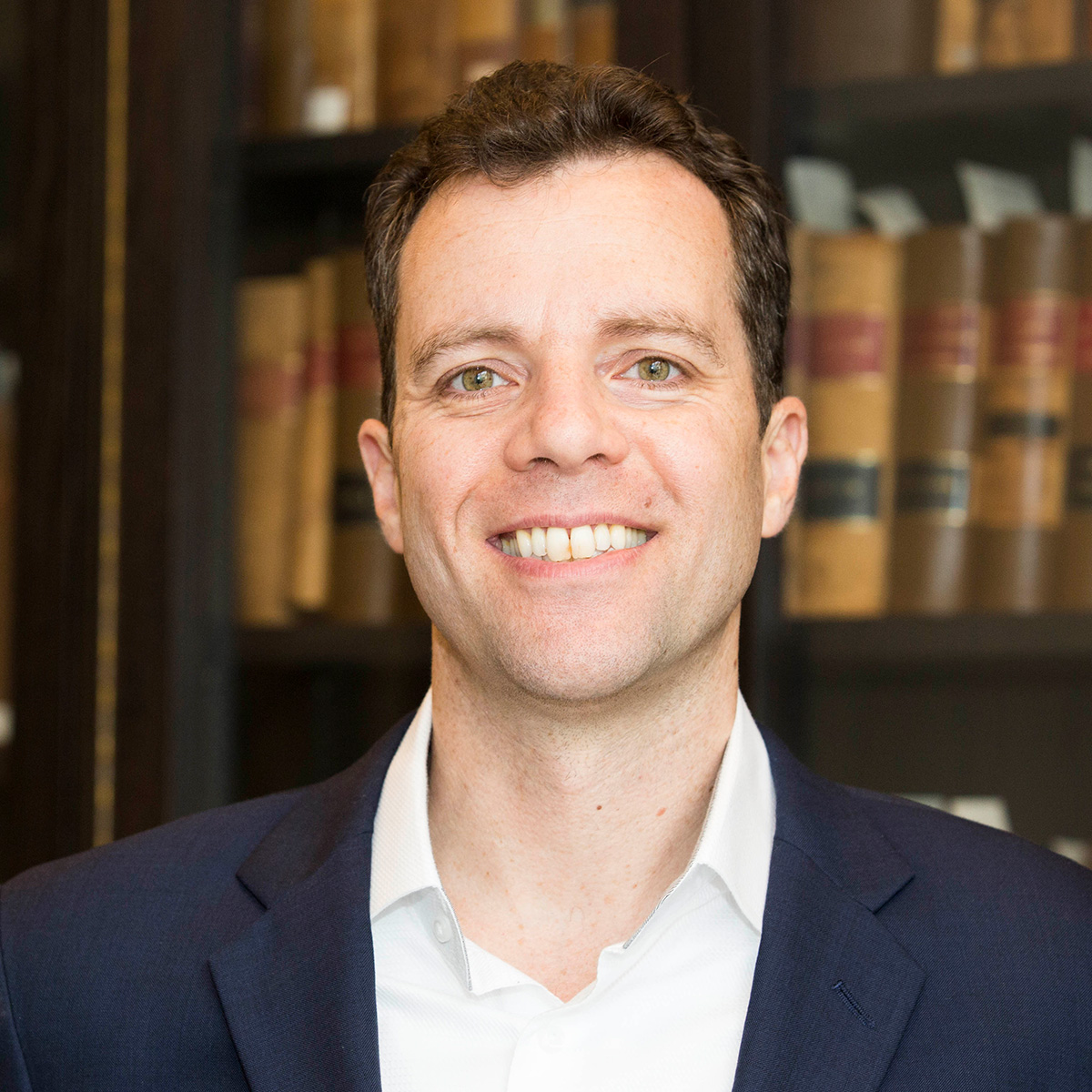
Dave Fagundes
Professor of Law
Associate Dean of Faculty
Click here for Professor Fagundes’ Emory Law faculty listing
Tuesday, November 10, 2026
5:30 P.M. LIGHT RECEPTION
6:15 P.M. LECTURE, FOLLOWED BY HEAVY RECEPTION
VENUE:
The Houston Club
910 Louisiana, Suite 4900 – Houston
To RSVP or for further information, contact
ipil@uh.edu or 713.743.2180
Approved for 1.0 hour of Texas MCLE
Copyright Administration by Accretion: 50 Years of the 1976 Copyright Act
One of the most overlooked ways that the 1976 Act transformed American copyright is how it changed the course of the Copyright Office as an administrative agency. This Lecture discusses how the 1976 Act ushered in a form of administration that was not only new to copyright but rare among agencies generally: administration by accretion. It then elaborates this descriptive claim and its implications in three steps. First, by detailing how copyright administration has unfolded following the inflection point of the 1976 Act. The Act expanded the administrative duties of the Copyright Office but did so without providing a clear vision or practical infrastructure for effectuating those new responsibilities. Subsequent statutes have grafted further obligations onto the Office, also in a piecemeal manner. Second, by showing how this distinctive expansion of the Office constitutes a phenomenon largely untheorized in agency governance that we call “administration by accretion.” Accretion reflects the serial addition—typically through separate statutes addressing separate policy problems—of functionally heterogeneous regulatory, adjudicatory, allocative, or advisory duties to an existing agency without a corresponding redesign of that agency’s mission, structure, procedures, expertise, political supervision, or resources. Finally, by touching on the benefits and drawbacks of administration by accretion as applied to the novel challenges faced by American copyright law in the next half-century of the 1976 Act regime.
PRIOR LECTURERS
 2025 GAIA BERNSTEIN, Seton Hall University School of Law
AI Companions and the Crisis of Human Connection
 2024 ADAM MOSSOFF, George Mason University Antonin Scalia Law School
The Injunction Function:
How and Why Courts Secure Patents as Property Rights
 2023 VICTORIA L. SCHWARTZ, Pepperdine University Caruso School of Law
Virtual Influencers
 2022 JAMES GIBSON, University of Richmond School of Law
Uncoupling Trademark & Reputation
2022 JAMES GIBSON, University of Richmond School of Law
Uncoupling Trademark & Reputation
 2021 AMELIA SMITH RINEHART, West Virginia University College of Law
Navigating Multiplexed Technology Transfer
 2020 JORGE L. CONTRERAS, University of Utah S.J. Quinney College of Law
Anatomy of an Intellectual Property Movement: The Open COVID Pledge
 2019 SARAH BURSTEIN, University of Oklahoma College of Law
Toward a Normative Theory of Design Patents
 2018 TIMOTHY R. HOLBROOK, Emory University School of Law
3D Printing, Digital Patent Infringement, and Its Implications
 2017 JOHN R. THOMAS, Georgetown University Law Center
The End of Patent Medicines? Exploring the Rise of Regulatory Exclusivities
 2016 DANIEL C.K. CHOW, The Ohio State University - Moritz College of Law
Trademark Squatting in China
 2015 RUTH OKEDIJI, University of Minnesota Law School
Inventing Intellectual Property: Source Disclosure for Genetic Patent Rights?
 2014 DENNIS D. CROUCH, University of Missouri School of Law
Clarifying Patent Scope
 2013 ELIZABETH A. ROWE, Levin College of Law, University of Florida
Intellectual Property and Information Control
 2012 THE HONORABLE JIMMIE V. REYNA, United States Court of Appeals for the Federal Circuit
The U.S. Court of Appeals for the Federal Circuit: Immediate and Future Challenges
 2011 ROBERT BRAUNEIS, George Washington University Law School
Trademark Infringement, Dilution, and the Decline in Sharing of Famous Brand Names
 2010 JANE K. WINN, University of Washington School of Law
Information Security as a Governance Challenge
 2009 GREGORY N. MANDEL, Temple University Beasley School of Law
Patently Nonobvious: The Impact of Hindsight Bias on Patent Decisions
 2008 MARGO A. BAGLEY, University of Virginia School of Law
Illegal, Immoral, Unethical… Patentable? Issues in the Early Lives of Inventions
 2007 CLARISA LONG, Columbia University School of Law
The Political Economy of Intellectual Property Law
 2006 JOHN F. DUFFY, George Washington University Law School, Washington, D.C.
The Invention of Invention: A History of Nonobviousness
 2005 DAN L. BURK, University of Minnesota Law School, Minneapolis
The Problem of Process in Biotechnology
 2004 DAVID J. FRANKLYN, University of San Francisco School of Law
The Anti-Free Rider Principle in American Trademark Law
 2003 WILLIAM F. LEE, Hale & Dorr LLP, Boston
Attorney-Client Privilege and Willful Infringement
 2002 HON. PAUL MICHEL, U.S. Court of Appeals for the Federal Circuit, Washington, D.C.
Predicting the Scope of Patent Protection: Construing Literal Claim Scope and Determining Available Equivalents
 2001 YSOLDE GENDREAU, Université de Montreal, Quebec
The Exportation of Copyright Models: The Retransmission Right and the Internet
 2000 JERRE B. SWANN, Kilpatrick Stockton LLP, Atlanta
Trademark Dilution for the Year 2000
 1999 JOSEPH STRAUS, Max Planck Institute for Foreign and International Patent, Copyright and Competition Law, Munich
Multinational Patent Enforcement: Problems and Solutions
 1998 JOHN R. THOMAS, George Washington University Law School, Washington, D.C.
Transnational Patent Litigation
 1997 HON. NANCY LINCK, U.S. Patent and Trademark Office, Washington, D.C.
Patent Prosecution for the New Millennium


Perspectives on Patent Law from Three Federal Circuit Judges
 1995 DONALD S. CHISUM, CHISUM ON PATENTS
The Allocation of Decisional Responsibility Between Judge and Jury in Patent Trials
 1994 JOHN PEGRAM, Davis, Hoxie, Faithfull & Hapgood LLP
Complexity and Cost in Patent Litigation

