

Fifteen Years In, Is the ACA Built to Last? Health Experts Weigh in at UH Event 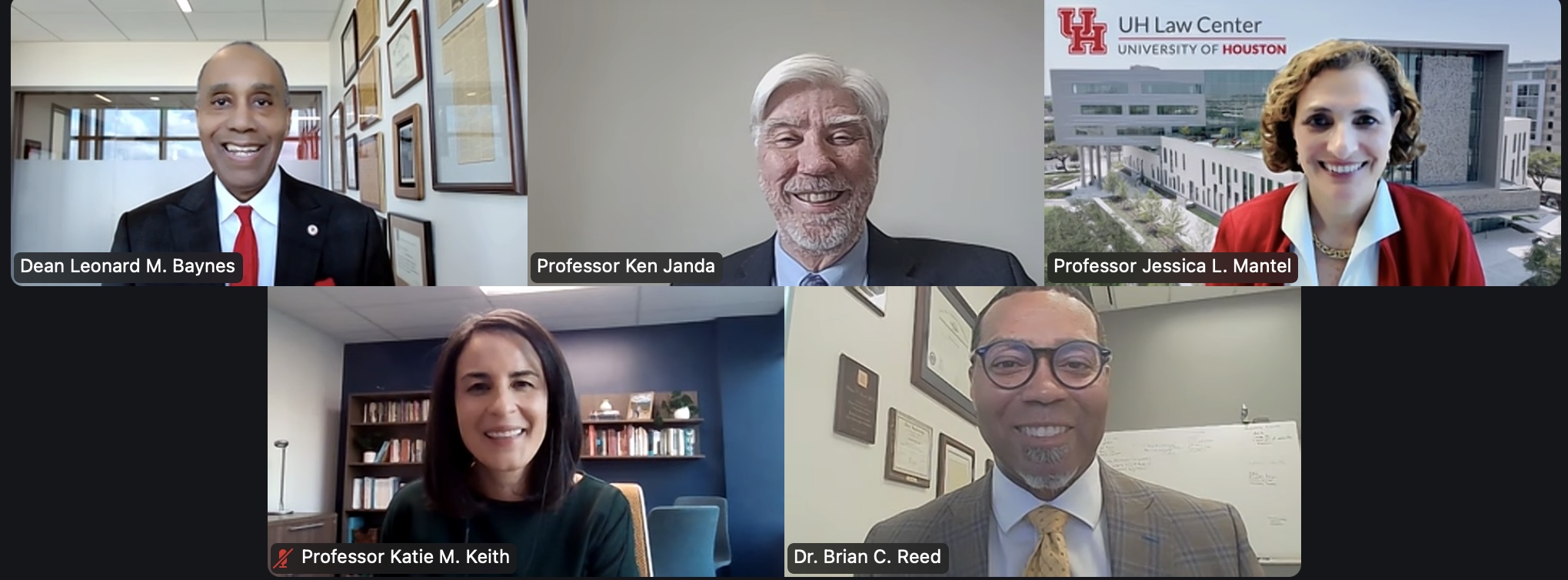
Dec. 09, 2025— With federal healthcare subsidies set to expire at the end of the year and regulatory changes on the horizon, healthcare experts are emphasizing how health law debates shape real-world outcomes. To explore these issues, the University of Houston Law Center’s Health Law & Policy Institute and the Tilman J. Fertitta Family College of Medicine hosted “Health Coverage at a Crossroads: Key Developments in Affordable Care Act and Medicaid Regulation”, a virtual panel featuring leading voices on the state of the Affordable Care Act (ACA), Medicaid, and Medicare.
Dr. Brian C. Reed, chair and clinical professor at the Tilman J. Fertitta Family College of Medicine, framed the conversation by noting that health outcomes depend on clinical care as well as social and environmental factors, making policy especially consequential.
“We think about individual behavior, how much people smoke, how much people drink, the lack of physical activity, the social and physical environment, and genetics,” Reed said. “But today’s discussion focuses on policy interventions and how they may impact mean mortality and quality of life, specifically the ACA.”
The ACA, enacted in 2010, reshaped the U.S. insurance market by expanding Medicaid eligibility, creating health insurance marketplaces, and prohibiting denials of coverage due to preexisting conditions. As the nation enters the law’s 15th year amid shifting federal policies, assessing the ACA’s future direction has become increasingly important for consumers, providers and policymakers.
The panel brought together leading voices in health law and medicine including Kenneth W. Janda, professor of practice at the Tilman J. Fertitta Family College of Medicine, Katie M. Keith, founding director of the Georgetown Law O’Neill Institute Center for Health Policy and the Law, Jessica Lind Mantel, professor and co-director of UHLC’s Health Law & Policy Institute, and Reed. UHLC Dean Leonard M. Baynes served as the moderator.
The discussion follows the recent government shutdown, where health care policy has again become central to national political negotiations.
“The ACA has faced political pressures and legal challenges, but the act has survived,” said Dean Baynes. “There is some concern that health care subsidies will expire on December 31, 2025, likely causing health care costs to the consumer to increase.”
The panelists examined the ACA’s trajectory 15 years after its passage. Janda, who has more than 40 years of experience in the health insurance industry, described the profound shift in national coverage levels, pointing to Census data showing that only 8% of
Americans remain uninsured — a dramatic decline since 2010. The significance of expanded coverage, he said, has an impact on people’s health.
“I always like to remind people that insurance does matter,” Janda said. “Recent evidence [suggests that] having health insurance improves health outcomes for people. Coverage saves lives.”
The ACA’s durability in the face of the ever-changing health care market has shaped its current momentum. “The ACA is the most litigated piece of social legislation in history,” said Keith, who also serves as an associate research professor at Georgetown’s Center on Health Insurance Reforms. “[It has emerged] generally unscathed through the courts over all this time in the law’s 15-year history.”
Keith noted the impact of recent policy changes on coverage trends. “It’s very important to understand that we have just reached peak enrollment under the Affordable Care Act,” she said. “Changes and potential disruptions are coming for these markets, and they are going to disproportionately impact those states with the highest enrollment.”
Mantel placed these developments within the broader philosophical debate that has shaped U.S. health policy for decades — whether health care should be treated as a right, a safety-net benefit for the “deserving poor,” or something earned through work.
“U.S. health programs have tried to balance these competing ideas,” she said. “When we ask who deserves publicly funded healthcare and on what conditions, we’re really revealing the values we want to prioritize, like individual responsibility versus collective obligation.”
Reed approached the discussion from a health care standpoint, connecting the policy discussion to the realities of population health and the goals that guide medical education.
“As we teach at the medical school, we usually begin with the population health framework, and it codifies why we’re there,” he said. “[We aim] to improve population health outcomes by increasing longevity, [enhancing] quality of life, and eliminating disparities so we’re not leaving populations behind because of race, ethnicity, socioeconomic status, geographic location, or sex.”
Panelists agreed that the coming year will be pivotal for the ACA as federal subsidies expire and policy shifts loom. While the law has proven resilient and reached record enrollment, upcoming changes could significantly affect coverage and costs. The decisions made in the months ahead will shape access to care and health outcomes nationwide, making informed, evidence-based policymaking more critical than ever.

