

Dean Conway Warns ‘America First’ IP Shift Threatens U.S. Innovation and Research at UH Law Colloquium
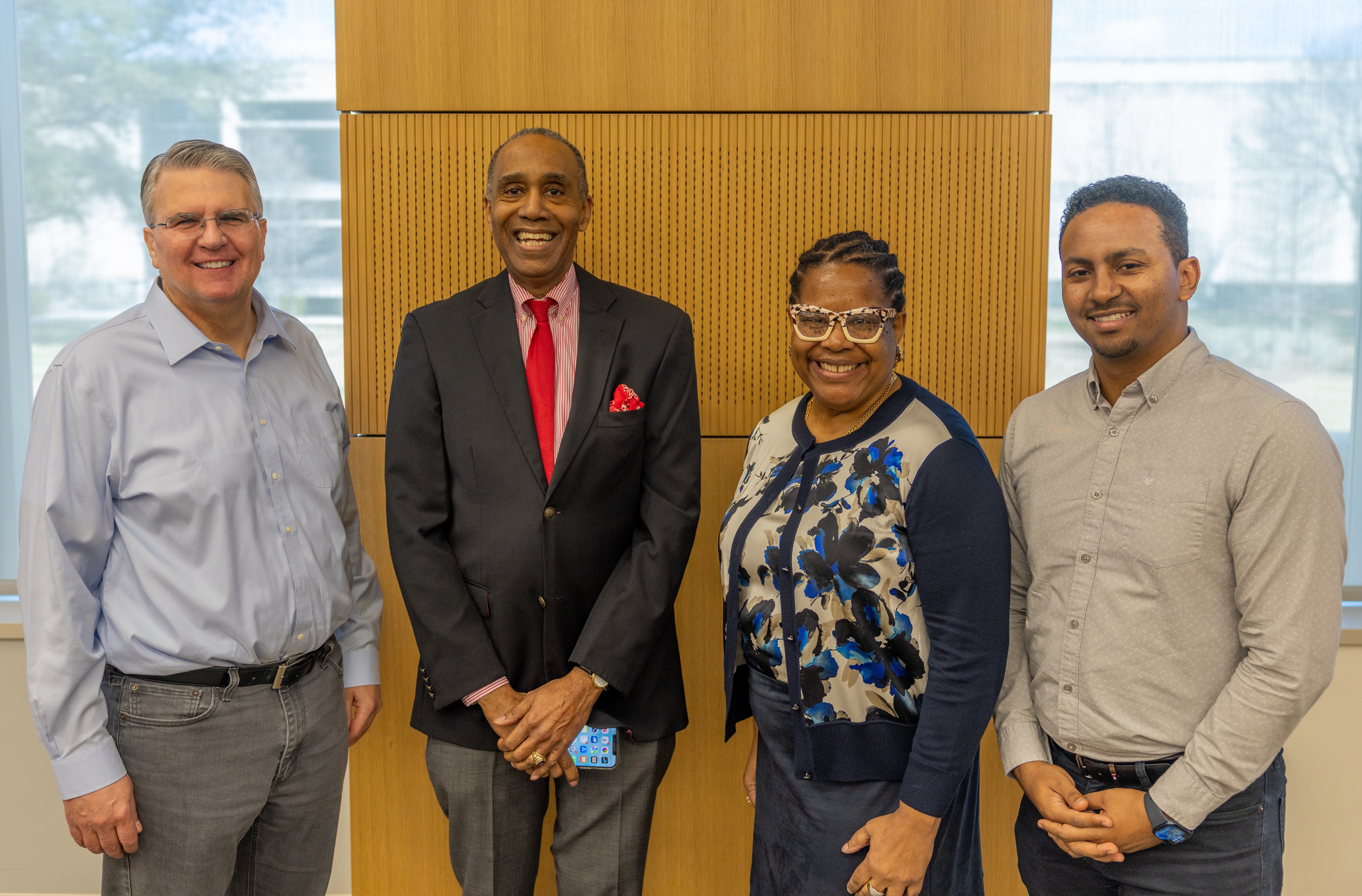
UHLC Associate Dean Greg Vetter, UH Law Dean Leonard M. Baynes with Penn State Dickinson Law Dean Danielle M. Conway, and UHLC Assistant Professor of Law Aman Gebru. Conway was visiting the University of Houston Law Center to present her research as part of the 2026 Colloquium/External Speaker Series.
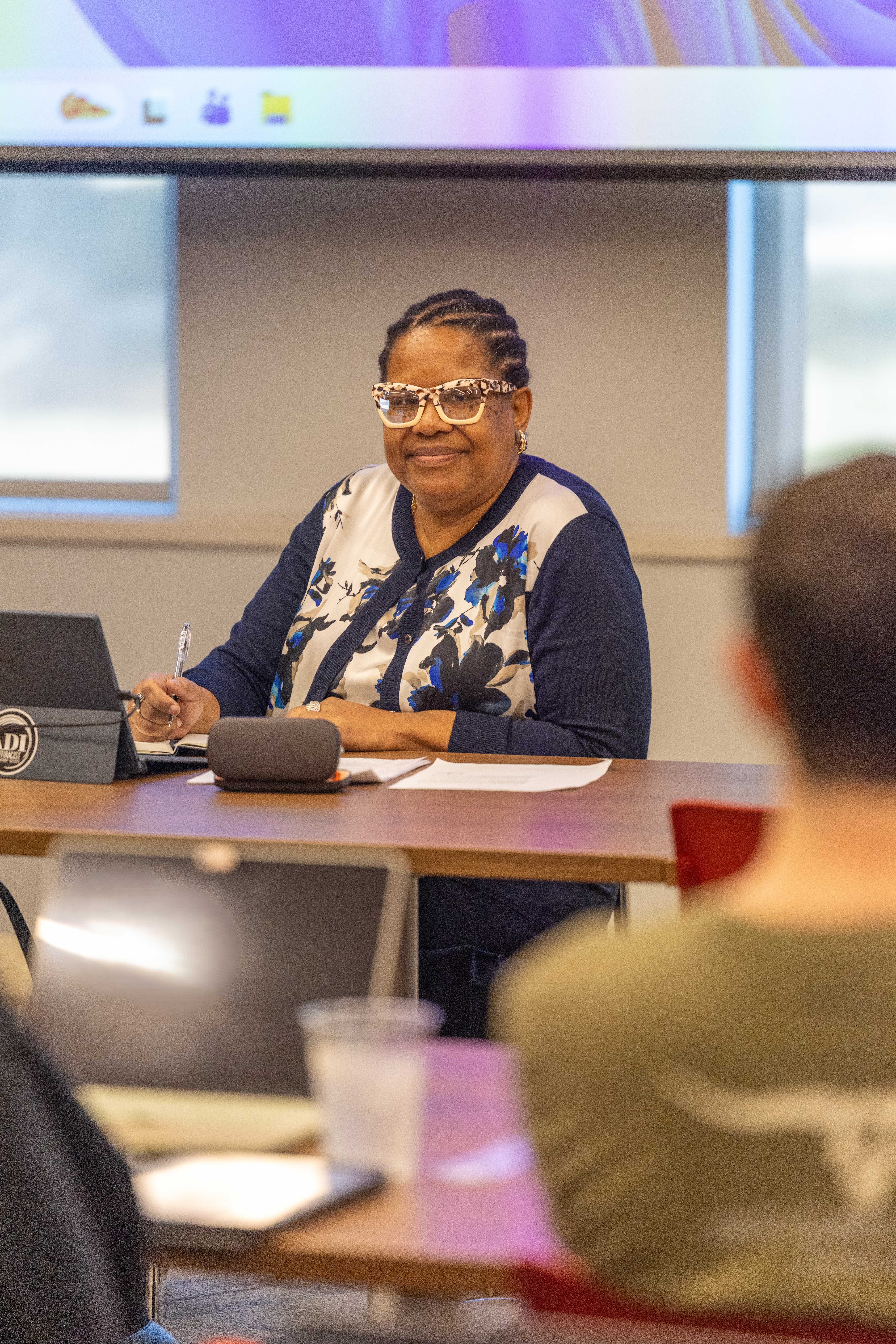
Dean Conway listening to audience feedback at UHLC.
March 17, 2026— The federal government’s emerging “America First” approach to intellectual property procurement rules could erode the bipartisan collaborative framework that has shepherded U.S. innovation for more than four decades, warned Penn State Dickinson Law Dean Danielle M. Conway, a leading legal scholar and the 2026 president of the Association of American Law Schools during a recent talk.
“Government [cannot] roll up for any reason and say, where you live, ‘I'm taking it’. There's due process. The same applies for government procurement of intellectual property,” Conway noted, speaking as part of the University of Houston Law Center’s 2026 Colloquium/External Speaker Series.
Conway’s talk, based on her research project, “A Look Back on the Foundations of Government Procurement of Intellectual Property in the New Era of ‘America First IP Ideology, Policy, and Legislation’,” examined the evolution, purpose, and emerging challenges of government procurement of intellectual property. Her expertise centers on procurement, entrepreneurship and IP.
She centered her concerns on “march-in” rights, a rarely invoked authority the government can use to claim control of inventions funded with federal dollars in case of public-interest failures. Conway noted recent federal pressure on universities, including Harvard, as an example of the government procurement being used as a punitive politicized tool.
“Federal Acquisition Regulation 27302 Section F and Section G, tells you that the government's ability to come in and say, ‘I know you have rights to this technology contractor, but we are exercising government rights to come in and take title to that,’ provision says absolutely nothing that would allow that to happen,” she said. “Due process saves us from using our [government] ideology in ways that exercise dominion and control over a free market system.”
Conway traced the evolution of U.S. innovation policy from a centralized, government-owned wartime model to a more balanced partnership between the federal
government, universities, and private industry. She credited this transformation largely to the Bayh–Dole Act, the 1980 bipartisan law that allowed private contractors and universities to retain ownership of inventions developed with federal funds while granting the government limited use rights. The resulting ecosystem fostered widespread commercial innovation and positioned the U.S. as a global leader in research and technology, she said.
“Both of these leaders [Senator Bayh and Senator Dole] understood the importance of a strong, innovative, technically focused economy, and they built a legislative framework to respond to that need,” Conway said. “They started actually thinking about small businesses and the ability to transfer the framework to one where small business later, large businesses, later universities and research centers could own their intellectual property instead of the government saying, ‘We own it.’”
Conway noted that an overly nationalistic posture risks sidelining international collaboration that has traditionally strengthened U.S. research.
“If we go to an America First IP regime, we're basically kicking all of that progress out the window because we somehow have created a mythology around foreign countries that we don't want to deal with,” she said. “It's to use government contracts like a weapon as opposed to the normal use of government contracts as a tool of stability, sustainability, and incentive for partnerships in innovation.”
Conway closed by stressing that policymakers needed to protect the foundations of America’s innovation ecosystem.
“In order to remain innovative, the investment and the time and the talent of Senators Bayh and Senators Dole should be respected in this historical context, because they laid out something pretty darn spectacular for us to improve upon and to follow,” she said.
UHLC’s 2026 Colloquium/External Speaker Series, held from January to April, brings together leading legal scholars from across the nation to present their research and foster scholarly dialogue. This year’s series is unique in that it features all law deans. For more information, click here.

