

Penn Law Dean Sophia Lee Says Political Realities, Not Legal Reasoning, Often Drive Constitutional Change at UH Law Center Event
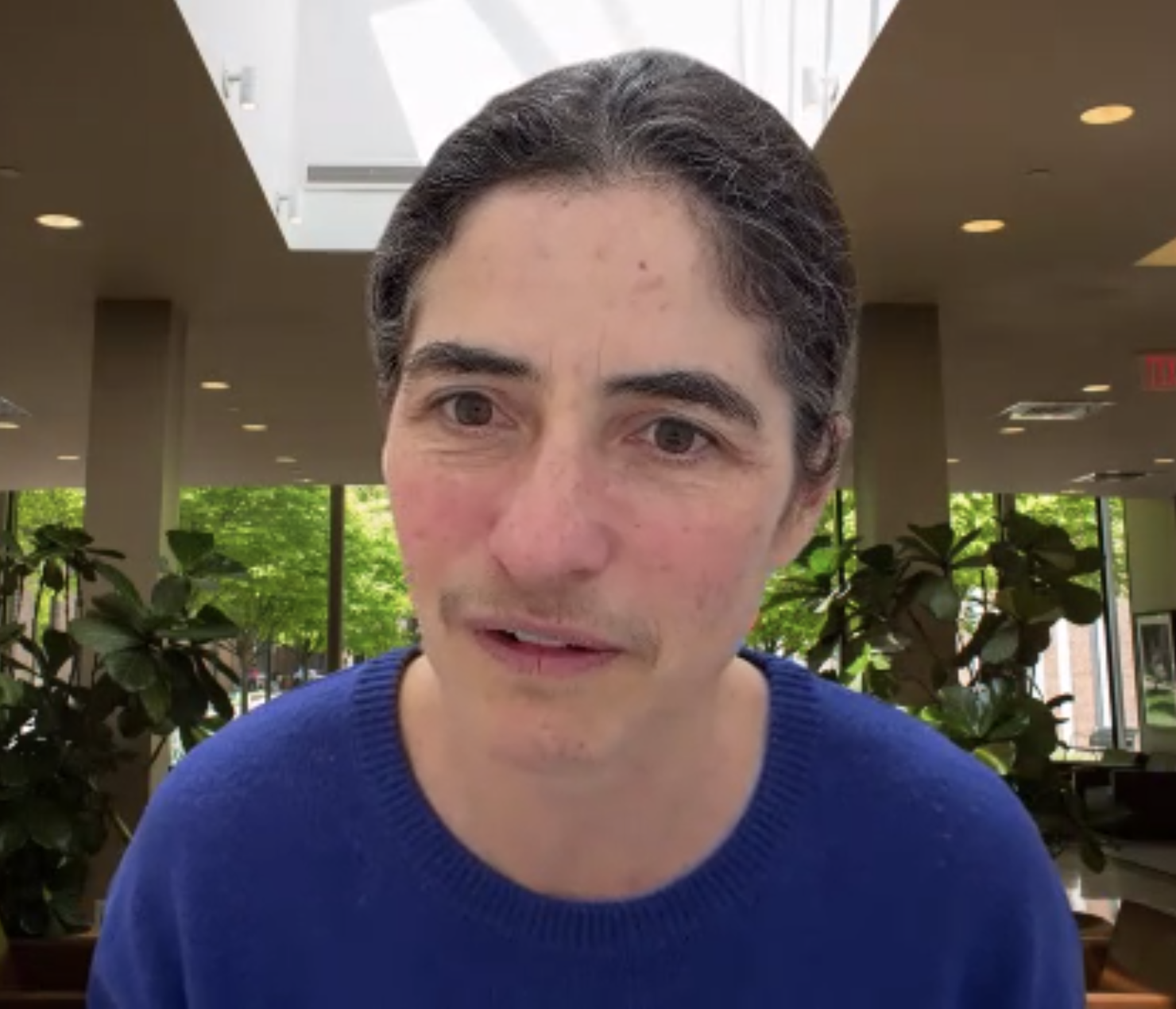
March 27, 2026 — The conventional story of the origins of modern Fourth Amendment protections has the timeline wrong, shared Dean Sophia Z. Lee of the University of Pennsylvania Law School at a recent virtual lecture hosted by the University of Houston Law. Correcting that history matters, she stressed, as courts revisit the limits of government power today.
“The Fourth Amendment didn’t first gain prominence among civil libertarians on and off the court due to prohibition enforcement,” Lee said. “Instead, it first drew their attention as a result of those earlier crackdowns on labor [activists] and radicals during World War I.”
A nationally renowned legal historian, Lee presented findings from her forthcoming article “The Lost History of Fourth Amendment Civil Liberties” as part of UHLC’s 2026 Colloquium/External Speaker Series. Her article is based on a broader research project rooted in constitutional privacy.
“I’m interested not in the history of what we today consider constitutional privacy, but really the history of how privacy came to be seen by people at the time as being of constitutional import,” she said.
Contrary to the widespread belief that Constitutional privacy is modern invention, Lee argues that the concept is one of the nation’s first civil liberties, dating back to the Civil War and Reconstruction when Americans began linking the Fourth and Fifth Amendments under a broader shield against government intrusion. But that once-unified idea fractured over time.
"[Privacy] was sliced and diced into informational privacy and decisional privacy, and then also parsed out into distinct and siloed amendments,” she said.
Her article focuses on World War I, when federal authorities raided labor organizations such as the Industrial Workers of the World (IWW), often using flawed warrants. Courts offered little protection for anti-war speech, forcing activists to turn elsewhere.
“When speech was criminalized at the federal level, it meant that First Amendment defenses were going to go hand in hand with criminal procedure defenses,” Lee said. Because courts often rejected claims of free speech during World War I, activists increasingly relied on search-and-seizure arguments instead. “It became clear that the Fourth Amendment would really be their only way to protect their freedom of speech,” she said.
That strategic shift shaped the early civil liberties movement. “It also made Fourth Amendment rights one of its four principles, because it noted that they were necessary to protect those speech rights,” Lee said.
Recovering this “lost history,” Lee said, is a reminder that constitutional doctrine does not grow solely from legal reasoning. She cautioned the audience of UHLC students and faculty against assuming constitutional rights naturally strengthen over time.
“The idea that somehow the pure logic of the law is going to necessarily result in the court strengthening the rights of a disfavored group does not happen very often,” she said. “The law is just deeply embedded in politics. It is rare moments when the court is willing to recognize rights on behalf of extremely politically disfavored groups.”
UHLC’s 2026 Colloquium/External Speaker Series, held from January to April, brings together leading legal scholars from across the nation to present their research and foster scholarly dialogue. This year’s series features all law deans. For more information, click here.

