

UH Law Alumnus Lance Lightfoot Shares Insights About In-House Legal Leadership and Healthcare Law
Quick summary: University of Houston Law Center alumnus Lance Lightfoot (JD '99), general counsel of Gulf Coast Blood, addressed UH Law students about in-house legal leadership and healthcare law. Lightfoot shared his career journey from Hendrick Medical Center in West Texas to becoming general counsel at Texas Children's Hospital and his current role at Gulf Coast Blood, emphasizing the importance of strategic leadership, mentorship, and alignment with organizational mission.
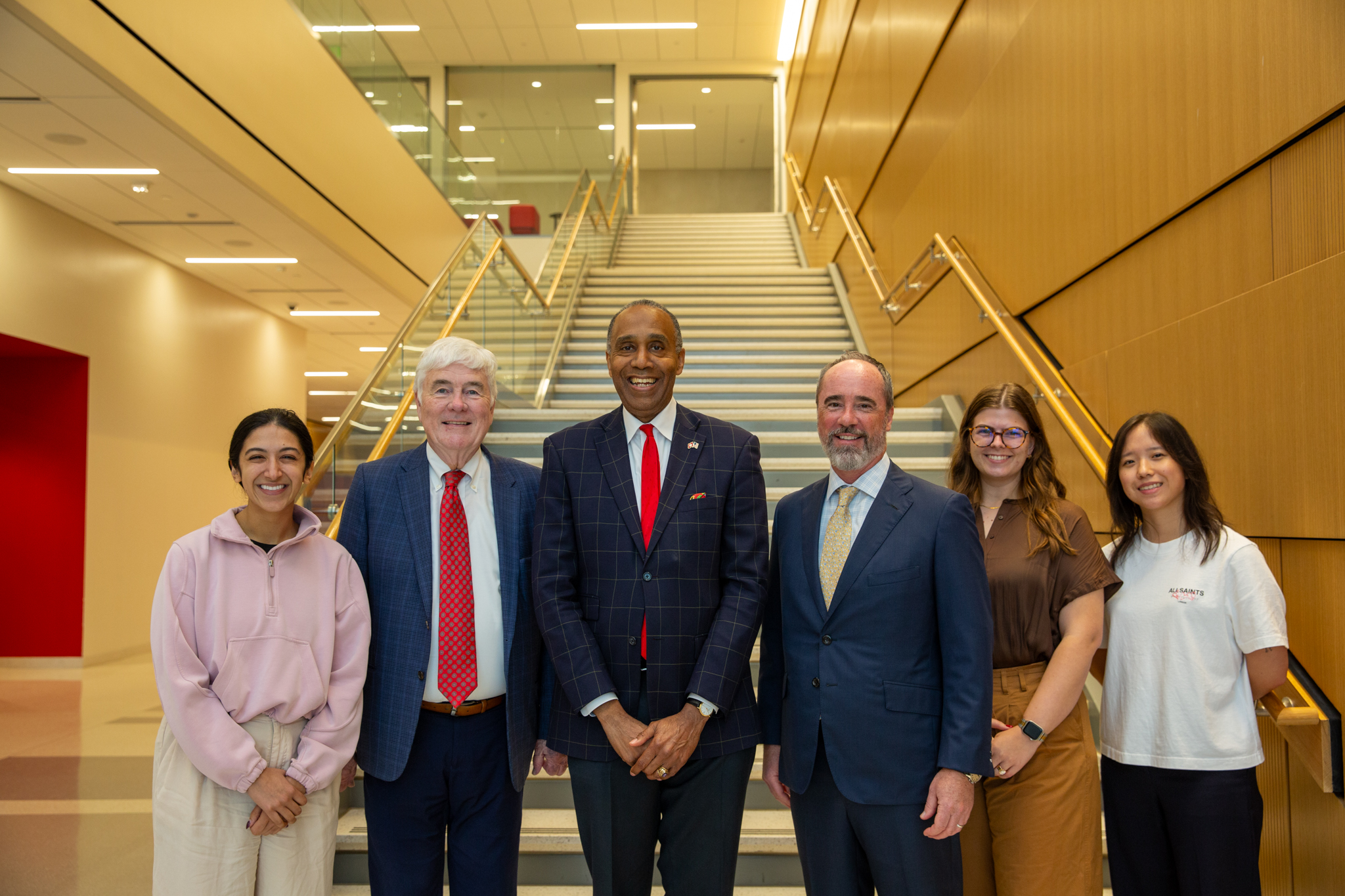
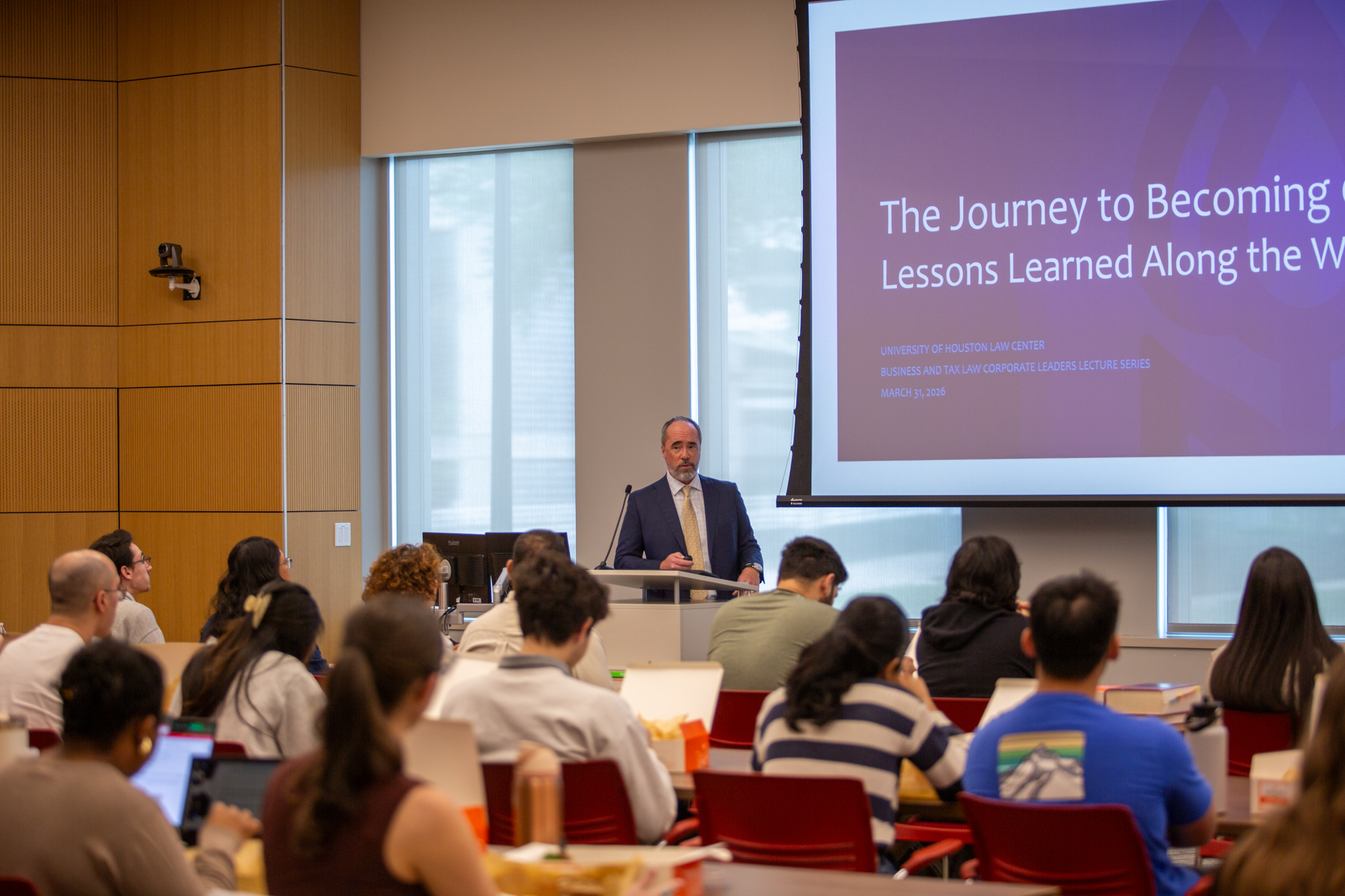
May 7, 2026 — The University of Houston Law Center alumnus Lance Lightfoot (JD '99), general counsel of Gulf Coast Blood, the primary supplier of blood and blood products to more than 170 hospitals and healthcare facilities in a 26-county region, recently spoke to students as part of UHLC's Business and Tax Law Corporate Leaders Lecture Series.
Lightfoot, Gulf Coast Blood's first general counsel in its over 50 years of existence, shared insights from his career and described the legal and strategic work he does to support the organization's life-saving mission.
"The new CEO [Nikhil Nayak] said, when he joined two years ago, 'How can we maximize [our] mission and grow even more?' Lightfoot said. "His vision is to partner with research institutions, medical device startups, and pharma to leverage our resources in ways that not only help save lives with transfusions but save lives by looking for preventative treatments."
In that environment, Lightfoot said, the general counsel serves as both a protector and promoter of the organization, managing risk while enabling innovation. He noted that general counsels often serve as an organization's conscience, asking difficult questions while supporting strategic growth.
"You're promoting the organization. You're growing the pie. Protecting intellectual property is an example. That's promoting and protecting at the same time," he said. "The higher you go, the more strategic you will need to be."
The Journey
Lightfoot always knew he wanted to be an in-house counsel at a mission-focused organization, preferably in the healthcare field.
"You have to know what motivates you, what interests you," Lightfoot said, adding that for him the motivating spark came from an introduction to healthcare law in a course taught by UHLC Law Foundation Professor Seth Chandler.
To start his career, he made the pivotal choice to leave Houston, one of the largest legal markets in the U.S., and relocate to Abilene in remote West Texas for his first in-house role as legal counsel at Hendrick Medical Center. The move required financial and personal sacrifice but also provided hands-on responsibility and valuable mentorship, he shared.
"I'm betting on myself," Lightfoot said. "And to me, there's always the analytical, logical way to do things, but you also have to trust your gut and your instinct."
That move, Lightfoot said, set the stage for career progression. He continued learning and networking, focused on returning to Houston and working in the Texas Medical Center. "If you are in health care, the Texas Medical Center is Mecca," Lightfoot said. "There is no place on earth better to be in-house health care. That's where I saw myself."
Almost three years later, he returned to Houston to join the Texas Children's Hospital. He soon became director of the legal department and eventually became Texas Children's general counsel at age 38.
"I went from overseeing a legal department of six people to being the general counsel of an organization where I now oversaw about 70 people in one day," he said. "Flip a switch, you're now general counsel. I'm not sure I was ready, but I had a great mentor in the previous general counsel."
As general counsel, he oversaw multiple areas, including legal, compliance, risk management, audit services, privacy, real estate, corporate governance and government relations — responsibilities that went beyond traditional legal work.
He shared that leadership is critical during periods of disruption and referenced the major reduction in force at Texas Children's that ended his tenure at the organization after 22 years. Lightfoot, reflecting on guiding organizations through change, described preparedness and succession planning as key risk management tools.
"To me, that's part of leadership as well, mentoring your successor, especially in-house, because a primary job you have is to protect the organization," Lightfoot said. "I believe, in retrospect, that the organization was able to move through that RIF with minimal disruption from the teams that I led, because I had done what I could to prepare my team, the organization [and] my successor."
Advice to Law Students
For students considering similar paths, Lightfoot encouraged students to:
- Take business-related coursework
- Build networking habits early
- Advocate for themselves and others
He emphasized that a fulfilling career is measured not only by salary, but by purpose and long-term satisfaction.
"Start walking in the direction you want to go," Lightfoot said. "Because fulfilling careers are about doing what gives you joy, what gives you excitement. And that's hard to measure in dollars."
The Business and Tax Law Corporate Leaders Lecture Series brings UH Law students together with accomplished alumni to learn about different career pathways and gain insights into the evolving demands of the legal profession.

